
Table of Contents
What Is the Pygmalion Effect?
The Pygmalion Effect, also known as the Rosenthal Effect, is a psychological phenomenon where higher expectations lead to improved performance.
The term originates from Greek mythology, where the sculptor Pygmalion fell in love with his own ivory statue, which later came to life. Similarly, in education, when teachers hold positive expectations for their students, those students tend to rise to meet them—while low expectations can hinder performance.

The Pygmalion Effect in the Classroom
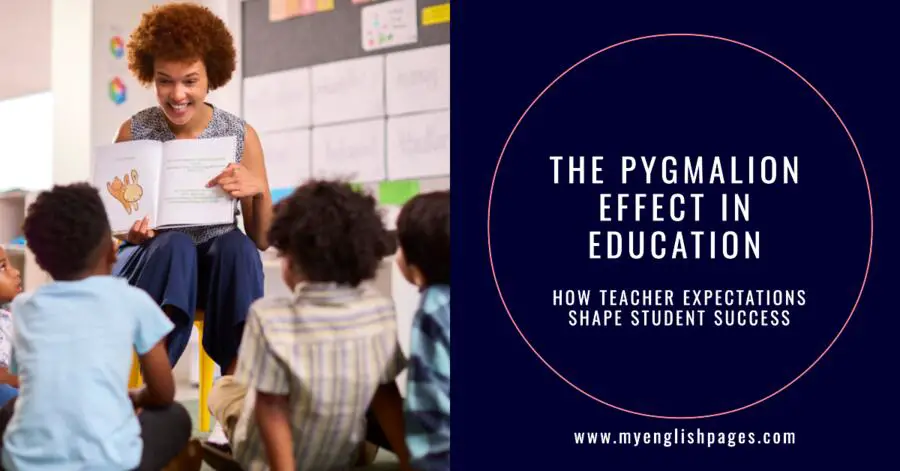
In education, teacher expectations play a crucial role in shaping student outcomes. Whether positive or negative, what educators expect from their students often becomes a self-fulfilling prophecy.
- Negative expectations—often based on biases, first impressions, or stereotypes—can lead to decreased motivation and poorer academic results.
- Positive expectations, on the other hand, encourage students to perform better, reinforcing confidence and effort.
The Rosenthal-Jacobson Experiment (1968)
Psychologists Robert Rosenthal and Lenore Jacobson demonstrated this effect in a landmark study. They told elementary school teachers that certain students (randomly selected) were “intellectual bloomers” who would show significant academic improvement.
By the end of the year, these students—despite being no different from their peers initially—performed better simply because teachers unconsciously treated them with more encouragement, attention, and support.
This experiment proved that teacher expectations directly influence student achievement, even without explicit bias.
Key Implications for Educators
Understanding the Pygmalion Effect can help teachers create a more supportive and equitable learning environment. Here’s how educators can apply these insights:
- Avoid Judging Students Based on First Impressions
- Initial assumptions about a student’s ability (based on behavior, background, or appearance) can create unfair limitations.
- Instead: Give every student the benefit of the doubt and remain open to their potential.
- Believe in Your Students’ Abilities
- Confidence in students fosters their self-belief. Even subtle encouragement (“I know you can do this”) can make a difference.
- Instead: Use growth mindset language that emphasizes effort and improvement.
- Never Underestimate Student Potential
- Labels like “slow learner” or “gifted” can become self-fulfilling. Students often internalize these expectations.
- Instead: Focus on progress rather than fixed ability.
- Treat All Students Equally
- Unconscious biases (such as favoring outgoing students over quiet ones) can skew attention and feedback.
- Instead: Monitor your interactions to ensure fairness.
- Build Strong, Respectful Relationships
- Students thrive when they feel valued. A supportive teacher-student dynamic boosts engagement and effort.
- Instead: Show genuine interest in students’ growth and provide constructive feedback.
Conclusion
The Pygmalion Effect reminds us that expectations shape reality. By maintaining high (but realistic) expectations for all students, educators can unlock hidden potential and create a more empowering classroom culture.
References
- Rosenthal, R., & Jacobson, L. (1992). Pygmalion in the Classroom (Expanded edition). New York: Irvington.
Further Reading
- Wikipedia: Pygmalion Effect
- Dweck, C. (2006). Mindset: The New Psychology of Success.